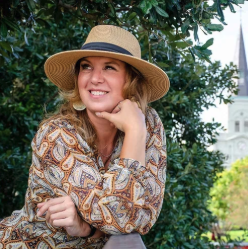
How Africa Gave Me Back to Myself
My 50th Birthday Journey Through Rwanda, Kenya & Tanzania
Turning fifty felt like a milestone I wanted to honor with intention — not with a party, not with a dinner, but with a journey that meant something. Ever since I was fourteen years old, sitting cross‑legged on the floor watching Gorillas in the Mist, I dreamed of trekking into the Rwandan mountains to see the gorillas. That dream stayed with me through every chapter of my life — the joyful ones, the complicated ones, and the heartbreaking ones.
In 2021, my world cracked open. I lost my mom. My marriage ended. I packed up my life in Soldotna, Alaska, and moved across the country to Charleston, South Carolina. And just before my 50th birthday trip, I made yet another move — this time to Jackson, Michigan — where I promptly came down with a terrible bout of pneumonia. Six weeks of being sick, exhausted, and unsure if I’d even be able to travel. It felt like life was testing me right up to the moment I was supposed to reclaim myself.
But I made it. And Africa met me with open arms.
Rwanda: The Dream That Took 36 Years to Come True — And the Country That Surprised Me Most
Before I arrived, I only knew Rwanda through three lenses: Gorillas in the Mist, Hotel Rwanda, and the book A Land of a Thousand Hills by Rosamond Carr, Dian Fossey’s dear friend. Those stories painted a picture of a country marked by tragedy, resilience, and wild beauty — but they also left me with assumptions. I thought Rwanda would feel the most “third world,” the most raw, the most visibly shaped by its past.
But Rwanda surprised me in every possible way.
It is rising — beautifully, intentionally, powerfully — from the ashes of its history. Of the three countries I visited, Rwanda was the most beautiful, the cleanest, and the most well‑kept. The road from Kigali to Volcanoes National Park was perfectly paved and smooth, winding through lush green hills that looked almost unreal in their vibrancy.
The roadsides were immaculate. I saw women sweeping the edges of the pavement as part of a government program designed with a clear purpose: to honor the land, to care for the community, and to support the future they are building through gorilla tourism. Rwanda understands that the gorillas are now their lifeblood — not just economically, but culturally and symbolically.
Proceeds from gorilla trekking go directly into the community. Families receive cows from the government — cow’s milk is prized and culturally significant — and farmers are supported and invested in. The entire system is built around shared benefit, shared responsibility, and shared pride.
And Rwanda makes sure visitors understand what the country has endured. Your first stop is the Genocide Memorial — a sobering, emotional, necessary experience. It is impossible to walk through that museum and leave unchanged. It is also impossible to walk through it and not realize that much of what the world was told is not the full truth. Rwanda does not hide from its past, but it also refuses to be defined by it.
What struck me most was the dignity. The resilience. The intentionality. Rwanda is not a country recovering — it is a country rising.
And in the midst of all that beauty, all that strength, all that rebirth, I finally met the gorillas I had dreamed of since I was fourteen.
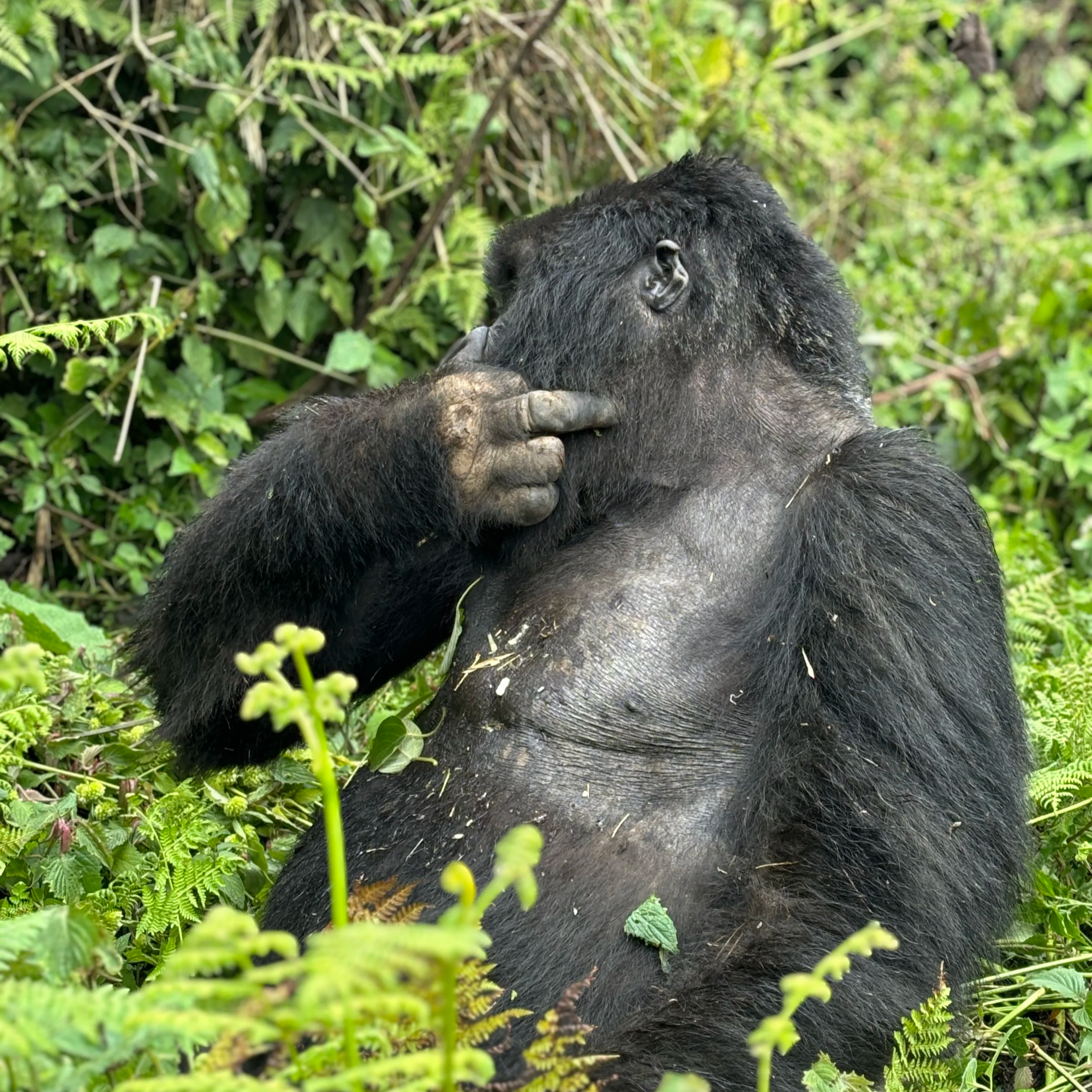
The Gorillas: Meeting the Gentle Giants Who Felt Like Family
Nothing prepared me for how human the gorillas would feel.
I had seen documentaries, read books, watched Gorillas in the Mist more times than I can count — but standing there, just feet away from them, was something entirely different. Each gorilla had their own unique face, their own expressions, their own personality. You could see curiosity flicker in their eyes, amusement in the tilt of their head, even a kind of quiet wisdom in the way they observed us.
I knew how strong they were — how easily the silverbacks could break a human in half if they wanted to. But nothing about their manner suggested aggression. Every movement was gentle, deliberate, unassuming. They were powerful, yes, but their power felt rooted in peace rather than dominance.
One gorilla watched me with an expression that felt almost like recognition. Another scratched their head in a way that made me laugh because it looked exactly like something a human would do. A young one peeked at us from behind their mother, shy but curious, the same way a toddler might hide behind a parent’s leg.
Their family dynamics were familiar too — playful juveniles, protective mothers, and the calm, watchful authority of multiple silverbacks, each carrying himself with a quiet confidence that felt almost regal. It was like stepping into a parallel version of humanity, one that was quieter, kinder, and more connected to the earth.
Being with them didn’t feel like observing wildlife. It felt like being welcomed into someone else’s living room.
Those hours — both treks, both encounters — changed me. They softened something in me. They reminded me that strength and gentleness can coexist, that curiosity is a form of connection, and that sometimes the most powerful beings in the world are also the most peaceful.
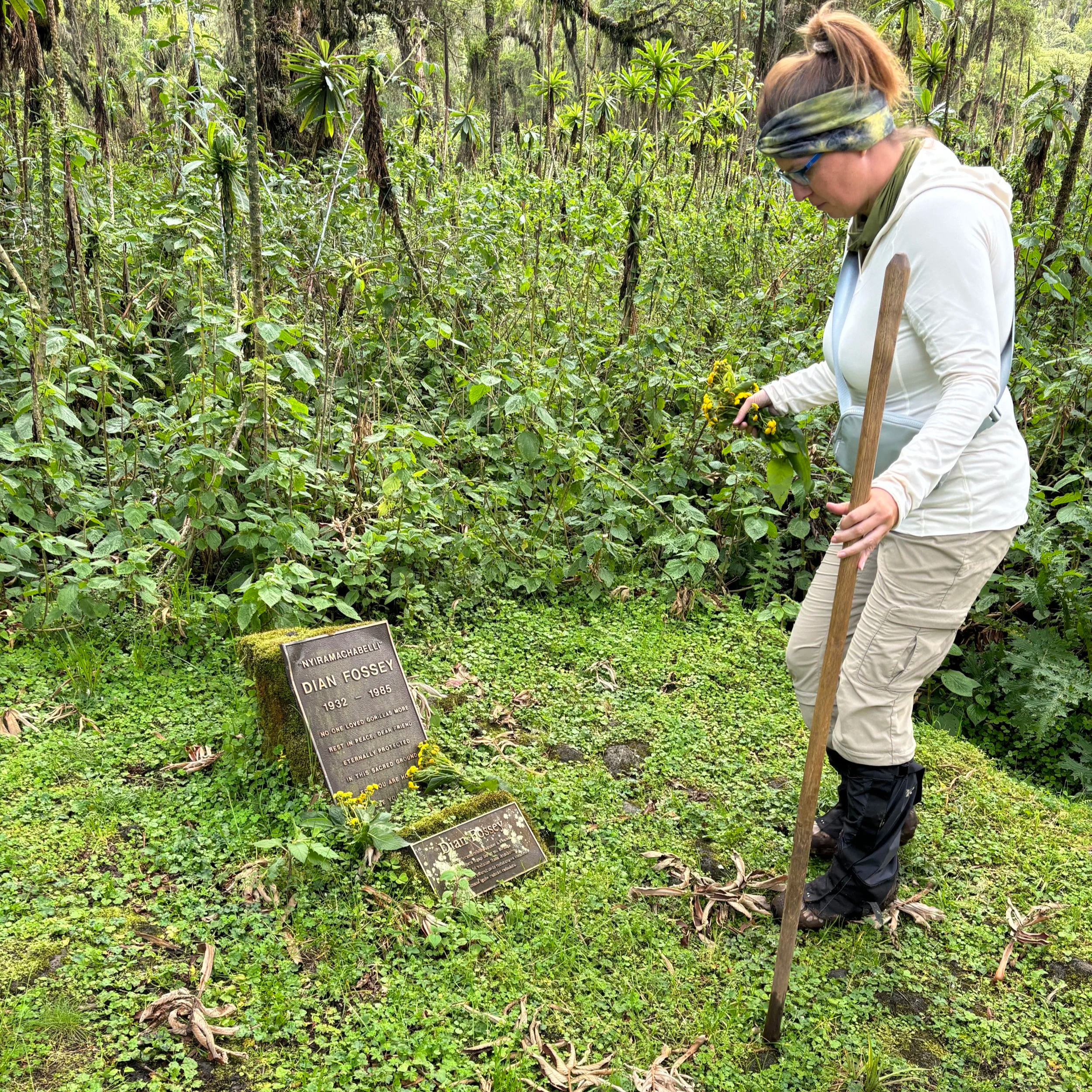
I also hiked to Dian Fossey’s gravesite and the remnants of her old camp
— a pilgrimage I had dreamed of since childhood. It felt like closing a loop between the girl I was and the woman I’ve become.
Before the trip, I spent six months learning Swahili because I’ve always believed that trying to speak someone’s language is a form of respect. In Rwanda, I quickly learned that Kinyarwanda is more commonly spoken, so I did my best to learn phrases on the fly. Every attempt was met with warmth, laughter, and appreciation.
Kenya & Tanzania: Sixteen Days of Awe, Each Place Its Own Universe
Every stop on my 16‑day safari through Kenya and Tanzania felt like stepping into a completely different world — each landscape carrying its own personality, its own rhythm, its own way of making you feel small and connected all at once.
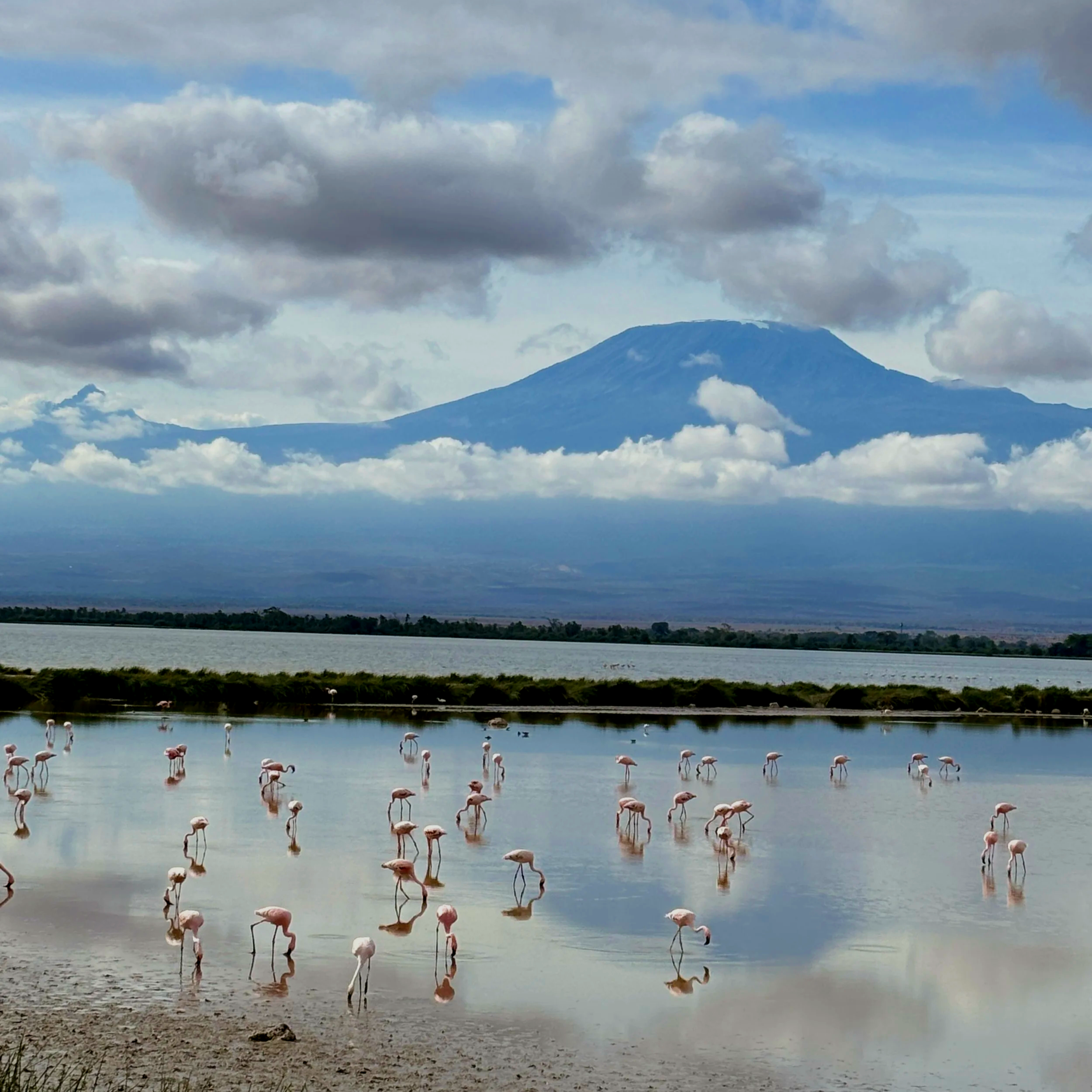
Amboseli: The Africa You Imagine
Amboseli was exactly what you picture when you think “African safari.” Wide open plains, acacia trees, and wildlife everywhere you look — elephants, lions, cheetahs, giraffes, zebras, buffalo, ostriches. And all of it set against the backdrop of Mount Kilimanjaro, rising like a quiet guardian over the land.
It was cinematic in a way that didn’t feel real, like I had stepped into a nature documentary and forgotten how to step back out.
Ngorongoro: The Place That Steals Your Words
Pulling up to the edge of the Ngorongoro Crater was one of the most surreal experiences of my life. There are moments when language fails, and this was one of them. The crater makes you feel tiny and insignificant, yet somehow deeply rooted — like you belong to the earth and it belongs to you.
Visiting the site where the earliest human ancestors were discovered only intensified that feeling. Standing there, I felt grounded in a way I hadn’t felt in years. It was as if the land itself whispered, You come from here. You are part of this story.
Lake Victoria: A Glimpse of Simplicity
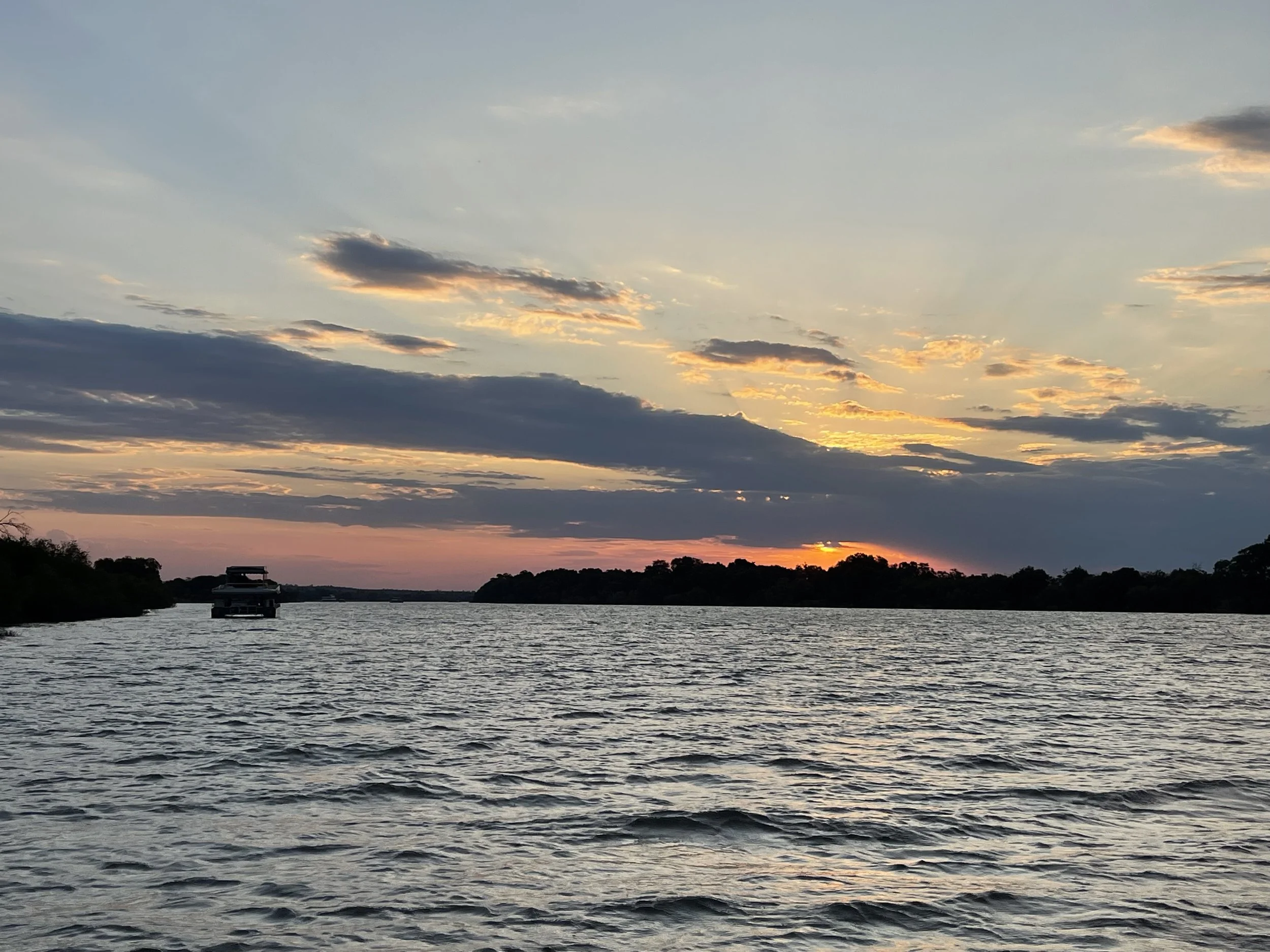
Lake Victoria was a shift in energy — softer, quieter, more human. Visiting a small fishing village along the shore made me long for a simpler time, before technology divided us, before constant noise drowned out connection. Life there felt slower, more intentional. People greeted us with warmth, curiosity, and a kind of joy that didn’t need anything flashy to exist.
The Serengeti: The Wild Heart
The Serengeti felt like the most remote place on earth. Our tented camp was tucked far from anything resembling civilization, and at night I could hear lions roaring in the distance. It wasn’t frightening — it was grounding. It reminded me that the world is still wild, still vast, still full of places where nature leads, and humans simply witness.
The Maasai Mara: Where the Sky Performs — And Where Dance Lives in the Soul
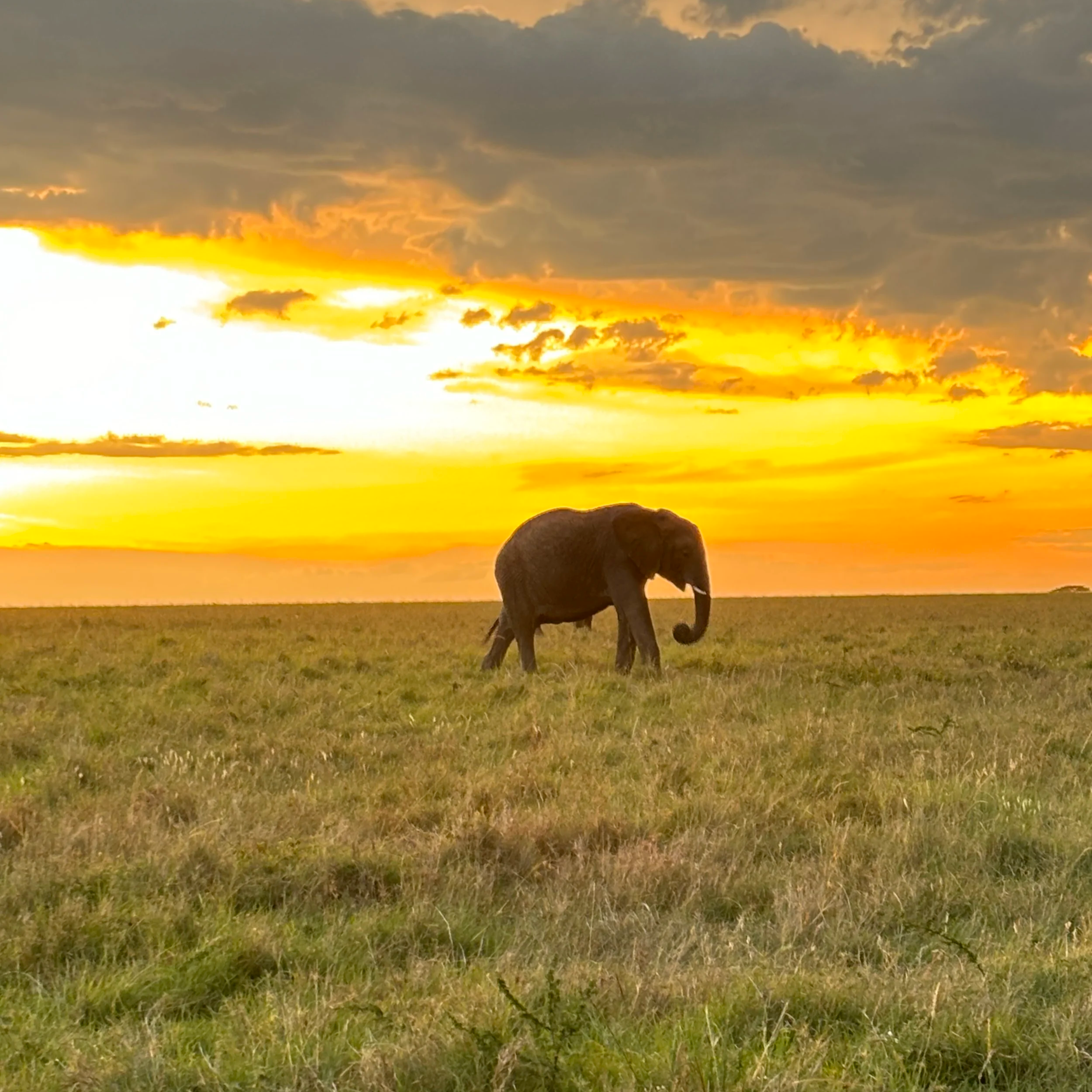
The Maasai Mara gave me the most beautiful sunsets I have ever seen. Vast plains stretching endlessly, the sky turning gold, pink, and fire all at once. It felt like the horizon was performing just for us.
But what moved me even more were the Maasai people.
They were welcoming in a way that felt ancient and immediate all at once. When they danced — the jumping, the rhythm, the deep vocal sounds that vibrated through the air — I felt it inside my chest. Their voices weren’t just sounds; they were heartbeat, history, identity.
Their village was a juxtaposition I’ll never forget: traditional mud huts, yet small solar panels perched on top to bring light inside. Old ways and new ways, side by side, neither replacing the other.
And then they invited me to dance with them.
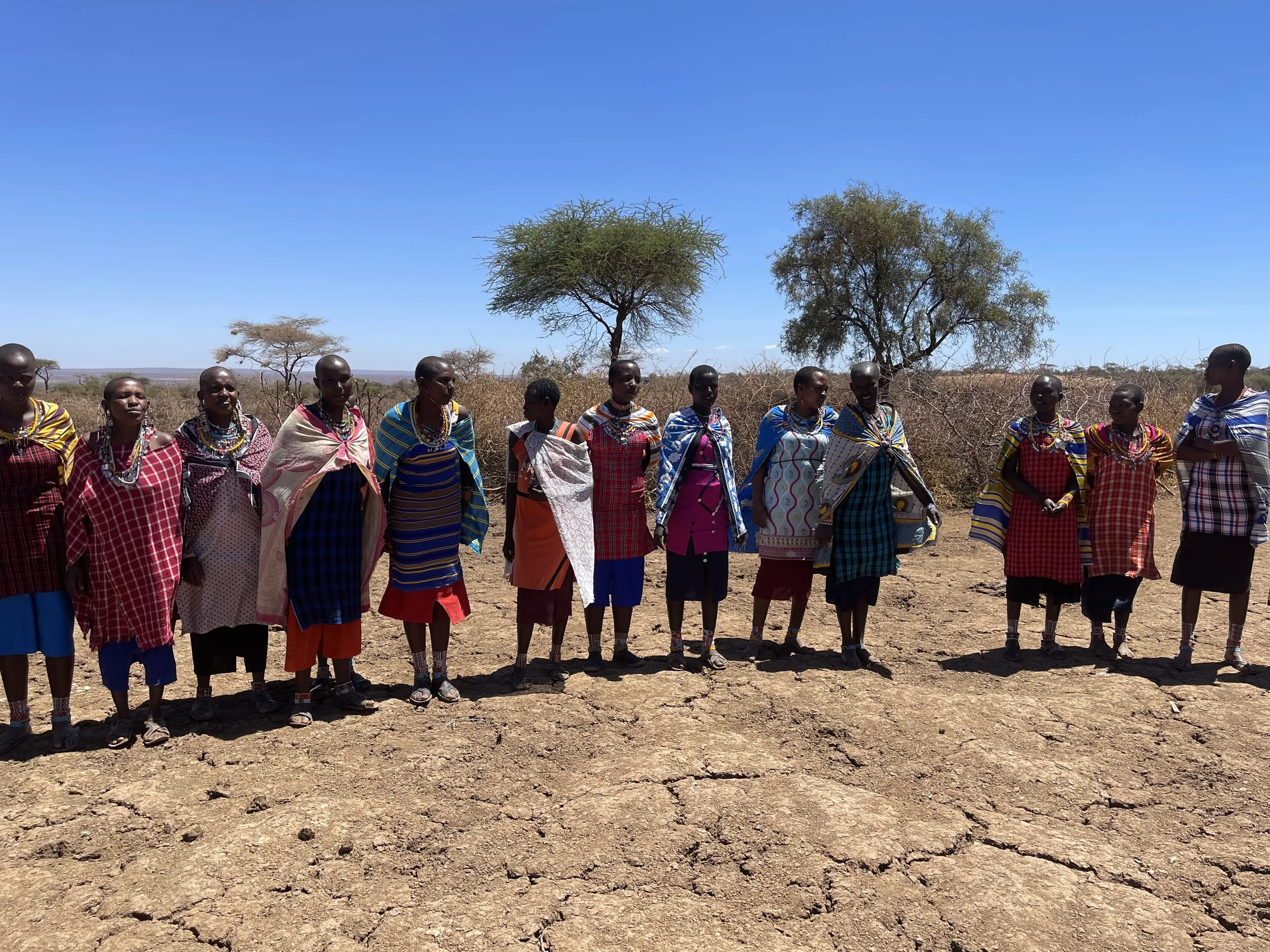
Dance is in my soul. It’s how I connect. It’s how I express joy. And in Africa, I had multiple moments when dance became a bridge between me and the people I met — once in a village in Rwanda, once in a fishing village on Lake Victoria, and then with the Maasai in the Mara.
When I danced with them, the connection was immediate and heartfelt. There was no language barrier, no cultural divide — just rhythm, movement, and shared joy. It was one of the most real, human experiences of my entire trip.
I took a hot air balloon ride over the Mara, floating silently above herds of animals moving across the land. That morning felt like a dream — weightless, peaceful, suspended between earth and sky.
We slept along the river, and at night I could hear hippos returning from grazing, splashing and grunting as they settled back into the water. It was strangely comforting, like being tucked into bed by the sounds of the wild.
The Turning Point
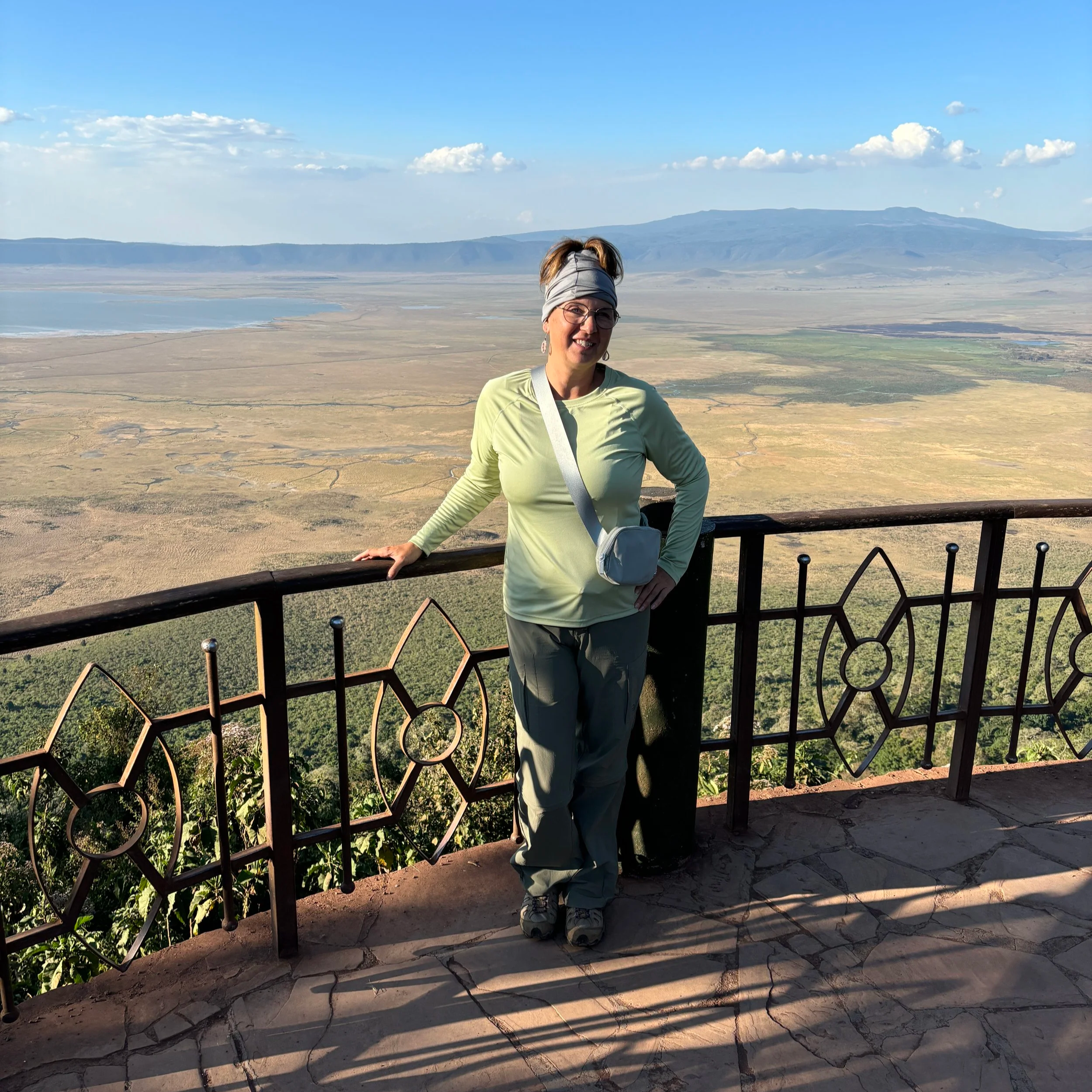
This trip wasn’t just a birthday celebration. It was a turning point.
After years of upheaval — grief, divorce, cross‑country moves, illness — Africa reminded me of who I am when everything else falls away. Curious. Brave. Open‑hearted. Connected. Joyful.
I came home wanting to figure out how to show up in the world every day the way I showed up on that trip — fully myself, fully present, and fully alive.
That journey didn’t just change my life. It helped me rebuild it.
And it’s the reason I now help others craft meaningful, human‑centered travel experiences through Unique Travels. Because I know what it feels like when a trip becomes a turning point — and I want other travelers to feel that too.